Gocheok Sky Dome is at 430 Gyeongin-ro, Guro-gu, Seoul, and its Korean name is 고척스카이돔. Save both before you leave your hotel. Almost everything that goes wrong for a first-time visitor here traces back to the building itself — what it was designed for, and what it was not.
A ballpark that became a concert hall
The dome opened in September 2015 as the first dome-type baseball stadium built in Korea, and it remains the only one. It replaced Dongdaemun Baseball Stadium, the old inner-city ground cleared in the 2000s, which is why a major sports venue sits in an industrial western district rather than near the tourist centre. The city of Seoul owns it and the Seoul Metropolitan Facilities Management Corporation operates it. Since 2016 it has been the home ground of the Kiwoom Heroes of the KBO League.
Its concert career is a side effect of that roof. Because it is fully covered, the Korea Tourism Organization notes it can host events regardless of season and weather — the reason it draws year-end award shows and winter tours that an open stadium cannot take. It has also hosted the 2017 World Baseball Classic first round, the 2019 WBSC Premier12, the 2024 MLB Seoul Series and the 2023 League of Legends World Championship final.
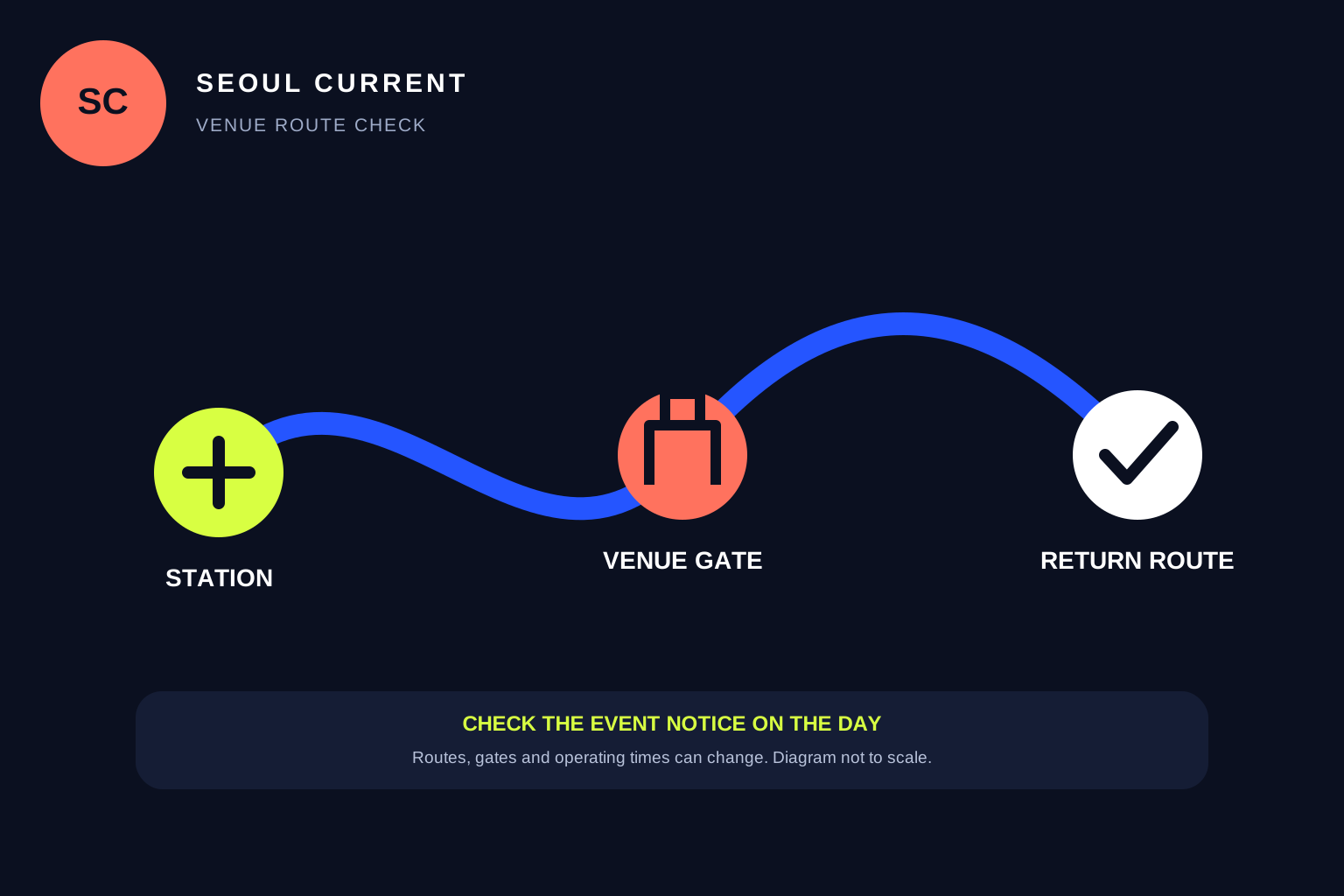
Original Seoul Current route checklist. Diagram not to scale; verify the event notice on the day.
What the roof actually changes
Two practical effects, one good and one to plan around.
The good one: your show will not be cancelled or delayed for rain, and you will not queue outdoors in a downpour once inside the concourse. Winter and monsoon-season dates here are far more reliable than at an open venue.
The one to plan around: an enclosed hard shell reflects sound. Domed stadiums have longer reverberation times than open-air ones, and production teams tune the system to compensate, but seats high in the upper bowl and seats angled away from the main hangs generally hear more reflected sound than direct sound. If you are choosing between a distant floor seat and an upper seat near the stage axis, sightline and sound do not always point the same way here. It is also warm and still inside during a full house; the roof that keeps the weather out also keeps the crowd’s heat in.
Reading a seat map that was drawn for baseball
The stands are a baseball bowl. The listed capacity is around 16,700 to 18,000 seats for sport, and published concert figures run higher — Visit Seoul lists 20,200 for concerts while other listings quote figures nearer 25,000. These numbers disagree because concert capacity is not a fixed property of the building. It depends on where the stage goes, how much of the floor becomes standing, and how many seats the production kills for equipment and sightlines.
That is the practical warning. A baseball seating chart found by searching will not match your concert. For a typical end-stage setup the stage occupies one end of the field, the floor becomes numbered blocks or a standing pit, and a block of stand seating behind and beside the stage is either sold as restricted-view or not sold at all. Sections that are excellent for baseball — behind home plate, high on the third-base line — can be the far end of the room for a concert.
Buy from the seat map published for your specific show, and if your ticket is standing, find the numbered-entry (입장 번호) call time in the notice. That time, not the door time, is when you need to be in place.
The access problem: Guil Station and the Line 1 split
The nearest station is Guil (구일) on Seoul Subway Line 1, a few hundred metres from the dome. Official listings do not agree on which exit to use — Visit Seoul points to Exit 2, Guro-gu’s own page points to Exit 1 — so on a concert night follow the organiser’s crowd-control notice rather than either.
The bigger issue is the line itself. Line 1 branches at Guro, and Guil sits on the Gyeongin branch running toward Incheon. A train from central Seoul is only useful to you if it is bound for Incheon; Soyosan, Dongducheon, Sinchang and Cheonan services will not stop at Guil. Check the destination on the front of the train and on the platform display, not just the line colour. This single mistake sends more overseas fans past the venue than anything else.
Guil is also a small two-exit station that opened in 1995 and was never built for 20,000 people arriving at once. Parking at the dome requires advance reservation and is not a realistic option for a sold-out show.
After the encore
Plan the return trip before the lights go down. The crowd leaves the bowl faster than the station can absorb it, and staff frequently meter entry to the platforms, so the queue can begin on the pavement well before the ticket gates.
Because you are on a branch, not the trunk, your usable service window is narrower than a generic “last train” time suggests. The question is not whether you can board a Line 1 train — it is whether you can make the final transfer to Line 2, 4, 5 or 9 that actually reaches your accommodation. Look up that last connection, not the last train from Guil, and give yourself a margin of 30 to 40 minutes for the walk and the queue.
Have a fallback: a bus route from Gyeongin-ro, or walking one station and boarding where the crush has thinned. Agree a meeting point away from the main gate, because mobile networks saturate around the exits.
What catches first-timers
- Arriving at the time printed as “doors,” when merchandise, ticket collection, ID verification and entry are four separate queues in four different places.
- Carrying only a screenshot when the organiser requires the physical ID that matches the booking name.
- Assuming the food and shops nearby stay open late. This is not a stadium district with a night-time economy; eat before, not after.
- Handing a passport to an unofficial “helper” outside the gate. Staff are identifiable and inside the perimeter.
Event-day police controls, closed exits and altered train services override any general guide, including this one. On the day, recheck the organiser’s notice, official Seoul transport information and your map app.