A Korean drama passes through half a dozen stages before it reaches a screen, and each one produces a different kind of announcement. English headlines tend to flatten all of them into the single word “confirmed.” Walking the timeline in order shows what each stage can honestly support.
기획 — planning
기획 (gihoek) is development. A production company or a platform commissions or options an idea, attaches a writer, and works up a premise, a target length and a shape. Treatments circulate. Directors are approached.
What can be reported here is thin and usually unofficial: that a writer is working on something, that a company has registered a working title. Nothing at this stage guarantees the project will be made. Trade reports at 기획 stage should be attributed to whoever is talking, and should be read as intent.
편성 — the slot
편성 (pyeonseong) is scheduling: a broadcaster or platform commits to carrying the show. This is the stage at which a Korean drama becomes real, because it is the point where the money and the airtime attach to the title.
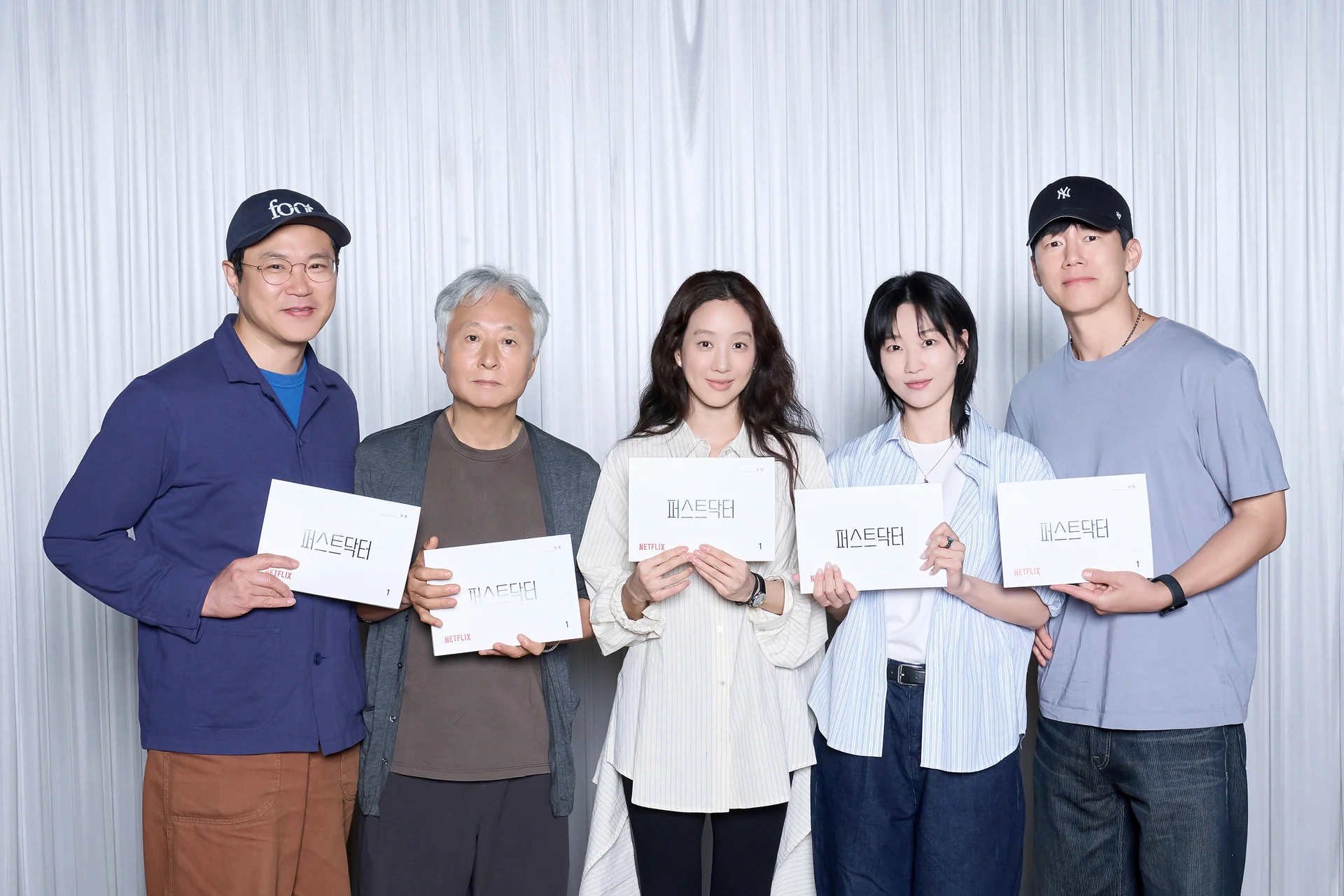
For a terrestrial or cable drama, 편성 fixes the day-and-time slot and therefore the episode count and format. For a streaming original, the equivalent is the platform’s own greenlight and announcement. Netflix’s post on First Doctor is explicit about this layer: it states the series has been greenlit, names the director Hong Jong-chan and writer Kim Min-suk, and describes the premise — a medical drama set in a paediatric surgery unit facing closure.
A greenlight confirms the project. It does not confirm when you will see it.
Casting
Casting runs in rounds, leads first. Korean coverage marks the difference carefully, and English coverage often does not.
An offer means a script has gone to an agency. “검토 중” (geomto jung, “reviewing”) or the common phrasing “positively reviewing” means an agency has confirmed receipt and interest, nothing more. Actors withdraw at this stage routinely. A confirmation is an agency or platform statement attaching a named actor to a named role.
Netflix’s announcement for Paper Man is a clean example of a confirmation: it names Cho Jung-seok, Park Hae-soo and Claudia Kim with their specific characters, alongside director Lee Il-hyung. Note what it still does not name — the supporting cast, and a release date. “Coming only on Netflix” is a distribution statement, not a schedule.
A lead cast announcement therefore confirms leads. It says nothing about the rest of the ensemble.
대본 리딩 — the table read
대본 리딩 (daebon riding) is the script reading, where the full cast sits down with the director and production team to read the early episodes aloud. Photographs from it are frequently released.
This is the first hard evidence that casting is actually locked. It is also the first point at which the ensemble becomes visible. What it does not prove is that filming has started, or that anyone in the room will remain through the shoot.
촬영 and 후반작업 — filming and post
촬영 (chwaryeong) is principal photography. A set photo, a location sighting or a fan-taken image proves a scene was shot on a day. It does not indicate how much of the series is complete.
후반작업 (hubanjakeop), post-production, is where a schedule most often slips invisibly. Korean dramas have historically finished episodes close to air, so “filming wrapped” and “ready to broadcast” can be weeks or months apart.
제작발표회 — the production presentation
The 제작발표회 (jejak balpyohoe) is the press event held shortly before a drama goes out, with the cast and director on a stage taking questions. It is the point at which a broadcast date is normally already public and the promotional cycle is fully open.
Quotes from a 제작발표회 are on the record and attributable. Treat them as the cast’s framing of their own show, not as neutral description.
Broadcast or release
A broadcast date is a specific day and time on a specific channel. A release date on a streaming platform is a drop date, sometimes staggered across weeks. A year — “coming in 2027” — is a window, not a date, and windows move.
The stage the headlines skip
It is 편성. English-language coverage jumps from “in development with” straight to “new drama announced,” and the scheduling commitment in between — the thing that actually distinguishes a project that will exist from one that may not — is rarely named as its own event.
That is why so many announced K-dramas quietly disappear. They were reported at 기획 and read as 편성.
The safest headline names its own subject: “Netflix confirms production,” “lead cast announced,” “release date set.” Inside the story, link the platform or agency statement and list what is still unknown. That record stays accurate when the schedule changes, because it never claimed more than the source did.