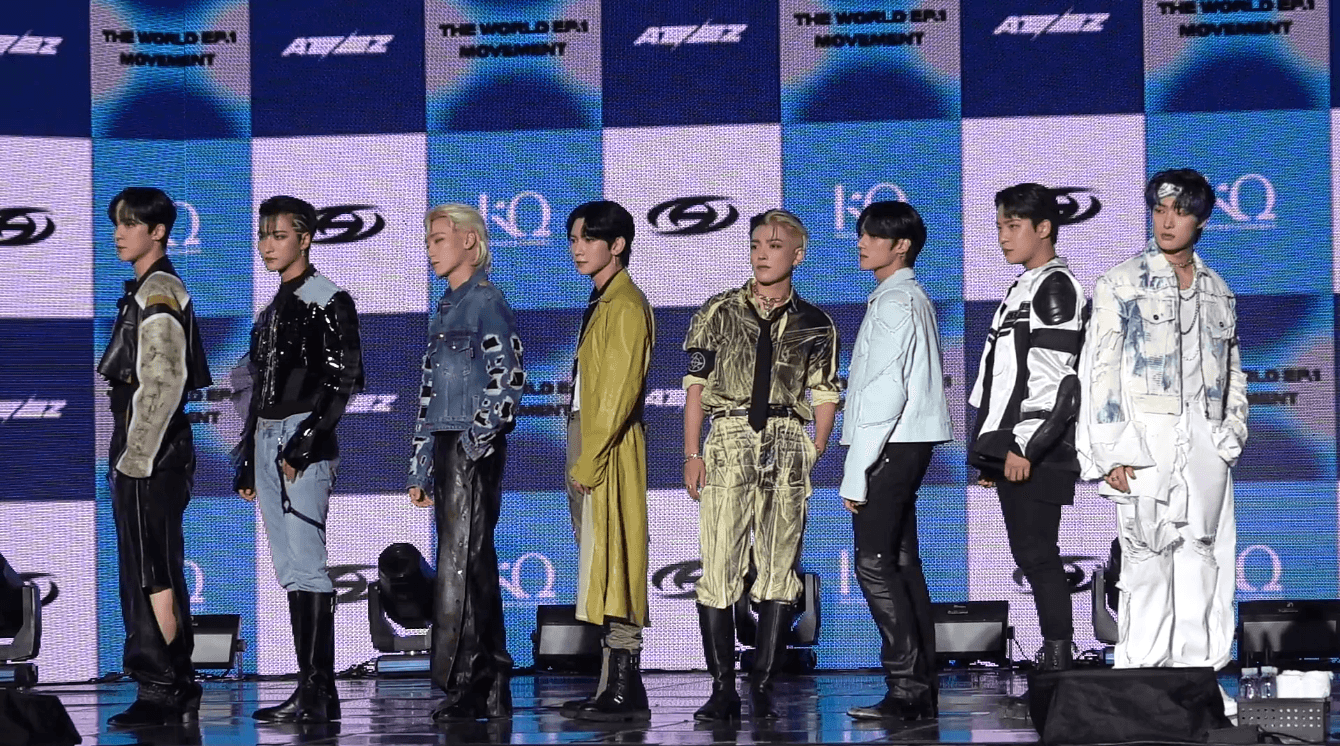
Olympic Hall — Korean 올림픽홀 — is inside Olympic Park at 424 Olympic-ro, Songpa-gu. The hall itself is a straightforward, comfortable seated room. Getting to it is the part people underestimate.
VisitKorea gives the park an area of roughly 1.45 million square metres. Arriving at a station on the edge of a space that size is not the same as arriving at the venue, and the gap between the two is where the evening goes wrong.
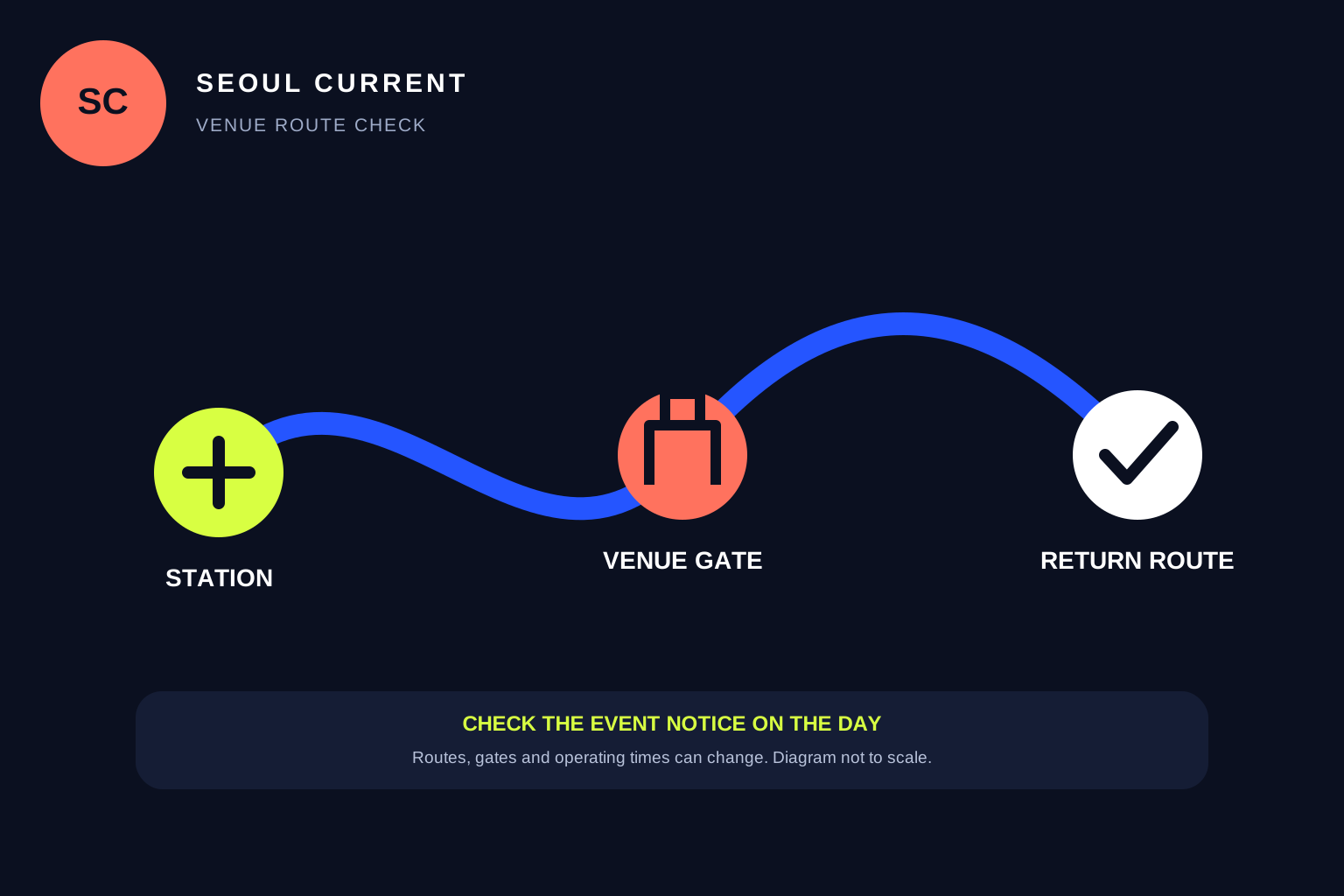
Original Seoul Current route checklist. Diagram not to scale; verify the event notice on the day.
Your station choice decides your walk
KSPO, which operates the park, lists four rail approaches:
- Olympic Park Station, Lines 5 and 9, Exits 3 and 4
- Mongchontoseong Station, Line 8, Exit 1
- Hanseong Baekje Station, Line 9, Exit 2
KSPO’s own Olympic Hall page names Line 5 Olympic Park Station, Exit 3 as the venue’s recommended approach. That is the short walk. The others are not wrong, but they land you at different corners of a very large park.
Two details about the trains matter more than the exits.
Line 5 splits. East of Gangdong the line divides into a Sangil-dong branch and a Macheon branch, and Olympic Park Station sits on the Macheon branch. A Line 5 train only helps you if its destination is on that branch — read the destination on the front of the train and on the platform display, not just the purple line colour.
Line 9 runs express and local services. Olympic Park is served by both, and the express is materially faster from the Gangnam and Yeouido side of the city. If your accommodation is west or south, Line 9 is often the better outbound choice even though KSPO’s venue page names Line 5.
The gate is a second, separate decision
Olympic Park is enclosed and entered through numbered gates, and KSPO publishes which facilities sit behind each one:
| Gate | What it serves |
|---|---|
| East Gate 2 | Olympic Hall, KSPO DOME, the handball arena |
| North Gate 2 | Olympic Indoor Swimming Pool, KSPO DOME, Seoul Baekje Children’s Museum |
| South Gate 2 | Woori Art Hall, velodrome, the handball arena |
| South Gate 4 | Peace Plaza, National Fitness Center, World Peace Gate |
| West Gate 1 | Sports Museum, information centre |
East Gate 2 is the one for Olympic Hall. South Gate 4 is the famous one — it is where the World Peace Gate and the big open plaza are, and it is where most tourist photographs of Olympic Park are taken. It is also on the opposite side of the park from your concert. Do not follow a general sightseeing route here.
Allow a real fifteen to twenty minutes from ticket gate to venue door, and more if a large event is running at KSPO DOME the same night. The paths through the park are pleasant, well surfaced and poorly signposted for a stranger in a hurry.
A 2,432-seat room, not an arena
Olympic Hall is newer than the park around it. It was built in 2003 on the site of the park’s outdoor tennis courts, and in 2010–11 the Ministry of Culture, Sports and Tourism funded a renovation that reopened it in June 2011 as a venue specifically for popular music.
KSPO’s venue page gives the main hall as 2,432 fixed seats including movable chairs, plus 500–600 floor seats and 22 wheelchair spaces, with a separate 240-seat small hall. Its park-wide venue directory rounds the same hall to 3,000. That disagreement is not an error to resolve — it reflects whether the floor is counted and how it is laid out on the night. Use the chart published for your show.
The stage is listed at 23.1m wide, 18.5m deep and 8.5m high, in a building of 11,826㎡ over one basement and two upper floors.
What that means in practice: this is a hall, not a bowl. Every seat faces the stage from the same side, the throw to the back wall is short, and there is no seat at the far end of a 60-metre floor. Sound at this scale is tuned as a single room rather than as a stadium PA with delay towers, so the gap between a good seat and an average one is much smaller than at KSPO DOME next door. Where seats do vary is the movable floor block, which is flat or shallowly raked depending on the configuration.
Its typical bookings are solo concerts, fan meetings and showcases rather than multi-night arena tours. Expect a crowd of a few thousand, not tens of thousands.
The park closes before you finish talking about the show
This is the detail that separates Olympic Park from a venue on a city street. VisitKorea lists park access hours: pedestrians and cyclists 05:00 to 22:00, with the plaza area open until midnight, and vehicle access 06:00 to 22:00. Entry after 22:00 is restricted to Peace Square and Meeting Square.
An evening concert can finish close to or after that boundary. In practice you will be leaving through a park that is dark, quiet and emptying, on paths without shops or shelter, and the Hodori road train that shuttles visitors across the park during the day will not be running.
Three consequences. Walk out the way you came in; an unfamiliar gate in the dark is a long correction. Agree a meeting point at the venue door, not somewhere in the park. And check your final transfer home before the show starts, not on the walk back.
Driving into a shared park
KSPO lists parking lots P1A through P11 across the whole park, with the Olympic Hall page pointing to lot P2, 380 spaces. Published park rates are ₩600 per 10 minutes for a compact car and ₩1,200 for a full-size vehicle, with daily caps of ₩20,000 and ₩24,000, the first ten minutes free, and a 50 per cent discount for disabled drivers and multi-child households. Park lots operate 06:00 to 22:00.
The lots serve every facility in the park at once. On a night when KSPO DOME is also selling out, 380 spaces is not a plan you can rely on.
Open the venue in Google Maps
Use Google Maps for orientation, then recheck the organizer’s gate and queue notice plus live official transit information on the concert date.