A Seoul concert can finish with enough time to enter the subway and still leave you stranded at a transfer station. The useful question is not simply “What time is the last train?” It is: What is the last complete route from this venue station to my accommodation, including every transfer?
There is no single last-train time for the entire Seoul network. Times vary by line, direction, destination and operator. Special events or holidays may bring extended service, but that is an exception announced for a specific date—not something to assume because a large K-pop show is taking place.
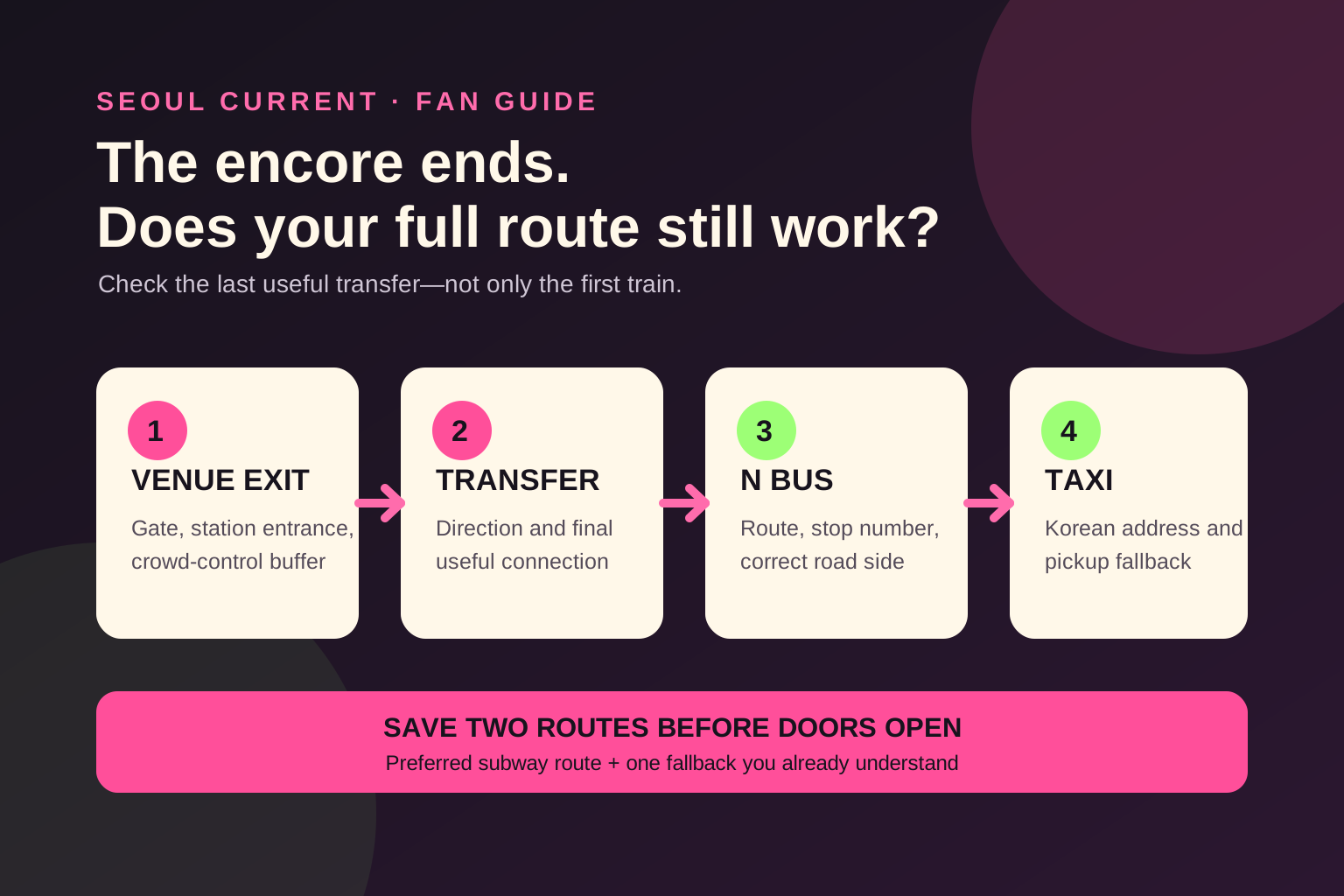
Check four parts of the route
Build the trip backwards from your accommodation.
- Find the closest station to your hotel or guesthouse.
- Identify every transfer needed from the venue.
- Check the last departure in the correct direction at each transfer.
- Leave a buffer for the walk, security exit, crowd control and platform access.
The first train you board is not always the problem. A late departure from Olympic Park, Gocheok, Jamsil or central Seoul can arrive after the final connecting train has already left.
Open the venue and accommodation in Google Maps for geographic context, then confirm live public-transport timing in a Korean transit app or the operator’s official information. Save the hotel name and address in Korean as well as English.
Do not treat an announced finishing time as an exit time
An event page may list a two- or three-hour runtime, but encores, comments, delays and crowd-controlled exits can move the real departure later. Even after the lights come up, it can take time to leave the seating area, find friends, collect belongings and walk to the station.
A practical buffer is more useful than an optimistic schedule:
- screenshot the venue exit and station entrance before the show;
- agree on one precise meeting point before mobile service becomes congested;
- decide the latest time you are willing to leave before the encore;
- keep enough phone battery for maps, translation and payment;
- avoid putting every route detail in a page that requires a live connection.
Leaving before the final song is a personal choice. Make it consciously rather than discovering at the platform that the useful connection has gone.
Event extensions are date-specific
Seoul sometimes announces extended subway or bus service for major holidays and exceptional events. The city’s 2026 Seollal notice, for example, described additional service for specified dates and separately warned that operators such as KORAIL may follow different schedules.
That is the important lesson for concert travel: an extension on one date does not create a general rule. Check the organizer, venue, Seoul Metropolitan Government, TOPIS and the relevant rail operator on the day of the event. Also check for station bypasses, closed exits, bus diversions or crowd-control measures.
If no official notice says service is extended, plan around the normal timetable.
Build a night-bus fallback before doors open
Seoul’s late-night buses use route numbers beginning with N. The city expanded the network to 14 routes, but routes and operating details can change. Use TOPIS or a current Korean map app to check the stop, direction and arrival time on the night of travel.
Do not assume a night bus stops directly outside the venue or hotel. A realistic fallback may involve:
- walking to a larger road after the crowd thins;
- taking one subway segment before transferring to an N bus;
- using a night bus toward a central interchange, then taking a taxi;
- waiting in a well-lit staffed area rather than at an isolated stop.
Save the stop name and number. Stops on opposite sides of the same road can serve completely different directions.
Know the taxi trade-off
Taxis are a useful fallback, not a guaranteed instant exit. Demand can spike when thousands of people leave together. Seoul also applies late-night fare surcharges during designated hours, so the same journey can cost more after a concert.
Before the show:
- save the accommodation address in Korean;
- install and verify a taxi app that you can actually use;
- keep a physical payment card or another backup;
- choose a pickup point away from a road closure or the densest venue gate;
- never enter an unlicensed vehicle offered in the crowd.
If your group is splitting a taxi, decide the destination and payment arrangement before requesting it.
A 10-minute pre-show transport check
| Check | What to save |
|---|---|
| Venue exit | Gate and nearest station entrance |
| First train | Line, direction and final destination shown on the train |
| Transfers | Last useful connection at every interchange |
| Official alerts | Extension, bypass, closure or bus diversion |
| Night bus | Route, stop number and correct side of the road |
| Taxi | Korean address and a practical pickup point |
| Emergency buffer | Charged phone, portable battery and a staffed waiting place |
The safest Seoul concert transport plan has two routes: the preferred subway journey and one fallback that you already understand. Check both again on the event day. That leaves the encore as a choice—not a transport emergency.